· 6 min read · Chuck
Whole house surge protector: is it worth it for a Western NY home?
A surge protector at the panel guards the furnace, well pump and appliances that plug-in strips cannot reach. Here is what it does, what the code says, and when it makes sense.
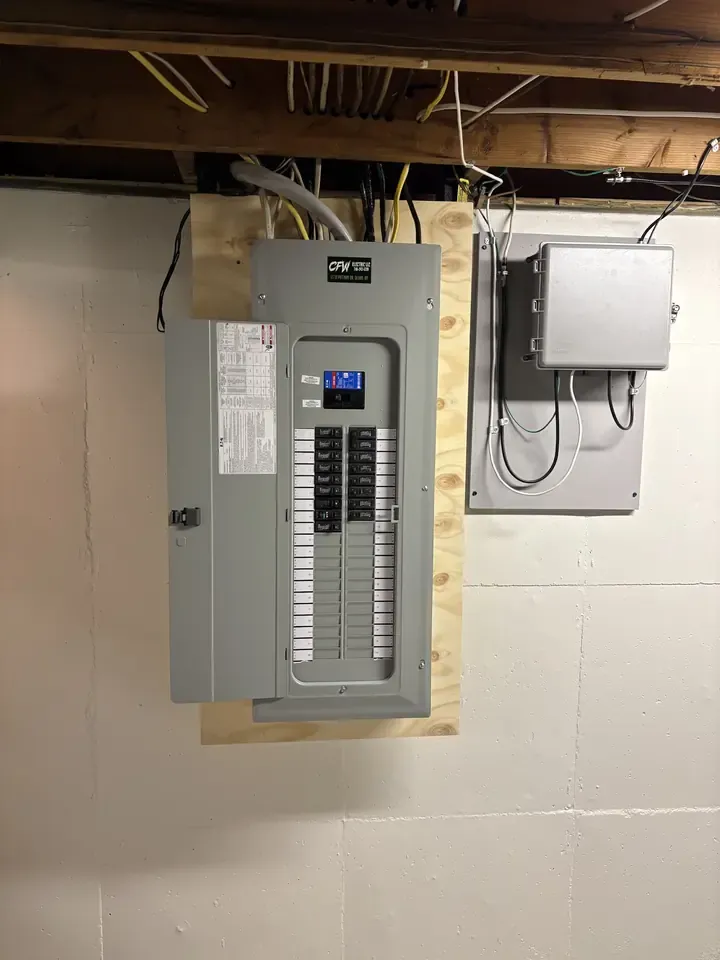
A whole house surge protector is a small device that mounts at your electrical panel and clamps down on voltage spikes before they reach the rest of the house. People ask me about them most after a storm takes out a furnace board or a garage door opener. It's a fairly small add-on, and it fits in a lot of panels without much fuss. Whether it's worth it for your house depends on what you're protecting and how your power, cable and phone lines come in.
Where surges actually come from
Lightning gets the blame, and a nearby strike can do real damage. But a lot of surges start closer to home. The National Institute of Standards and Technology booklet on home surge protection names two origins, lightning surges and switching surges, and explains that switching surges happen when loads are turned on or off inside your home "as well as by the normal operations of the power company."
Inside the house, anything with a big motor or compressor kicks back a little every time it cycles. A well pump, a central air unit, a sump pump, a furnace blower. One of those small hits won't fry anything, but they add up on the electronics in everything else plugged in. Today that's a long list: furnace and boiler control boards, the board in a new washer, the inverter in a heat pump, an EV charger, smart thermostats, the garage door opener.
What a whole house unit does, and what it can't do
The unit at the panel handles surges coming in on the power lines and big ones started inside the house. That covers hardwired equipment that a plug-in strip can never protect, like the furnace, the well pump, the range and the dryer.
What it can't do on its own is protect a TV or computer that's also connected to cable, internet or phone wiring. The NIST booklet asks whether a protector at the service entrance is enough for the whole house and answers, "Yes for one-link appliances, No for two-link appliances." A one-link appliance only plugs into power. A two-link appliance also has a cable or phone line, and a surge can come in that way. So the setup I recommend is a whole house unit at the panel plus a good plug-in protector at the TV and the computer, ideally one that also passes the cable or network line through it.
The same booklet points out that damage gets worse when the power and the cable or phone lines enter at opposite ends of the house and aren't bonded to the same ground. If I'm at your panel, I'll look at where the cable company grounded their line. It's a quick check, and a missing bond is a common miss.
What the electrical code says
Surge protection is now in the National Electrical Code for homes. Section 230.67, added in the 2020 edition, reads "All services supplying dwelling units shall be provided with a surge-protective device (SPD)," according to the code text published by Leviton. The same section says "Where service equipment is replaced, all of the requirements of this section shall apply." In plain terms, under that code a new or replaced service gets a surge protector as part of the job.
The code also says the device must be "a Type 1 or Type 2 SPD" and must be part of the service equipment or "located immediately adjacent thereto." The 2023 edition adds a minimum rating of 10kA. Which code edition your town enforces depends on what New York State has adopted, so if you're planning a panel upgrade, ask about surge protection when you get the quote. Adding it during the upgrade costs less than coming back for it later.
How it gets installed
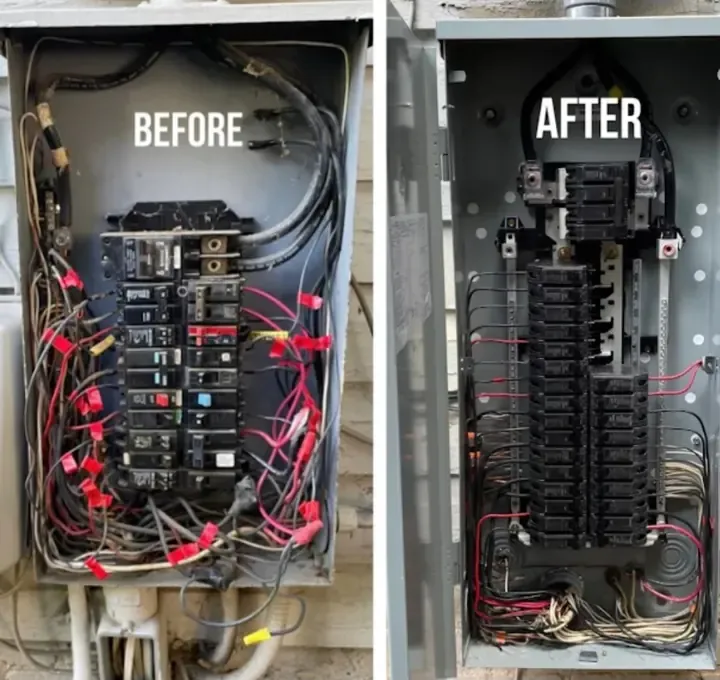
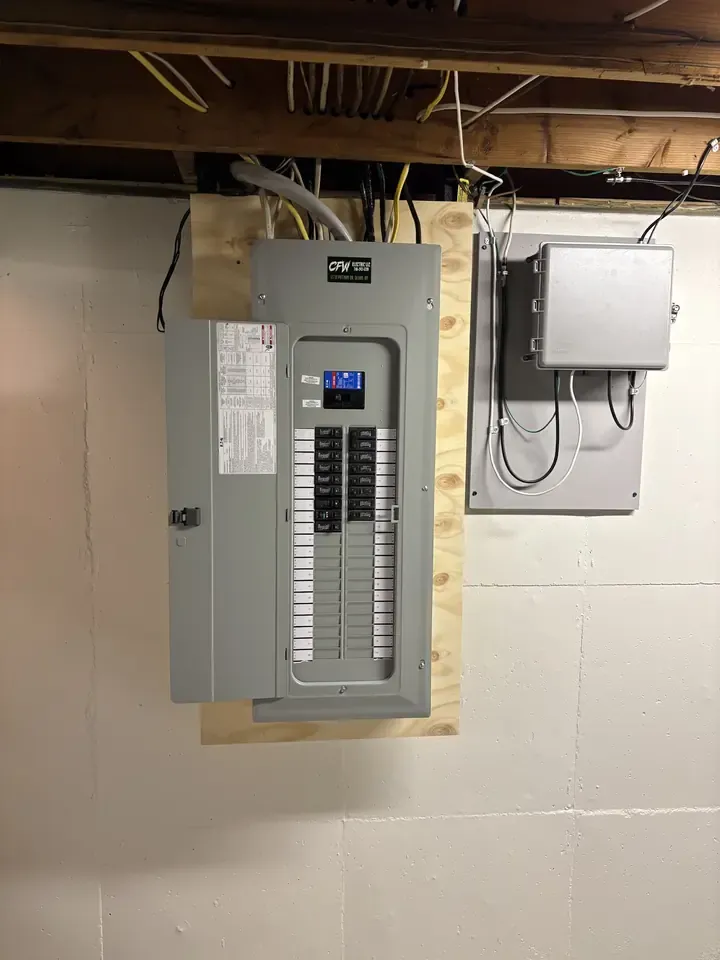
There are two common styles. One snaps into the panel like a two-pole breaker. The other is a small box mounted on the side of the panel and wired to its own breaker. Either way it needs two open spaces, and the shorter the wires to the bus, the better it works. If your panel is full, I can usually free up room by moving a couple of circuits to tandem breakers where the panel allows it, or the surge protector becomes one more reason to replace a panel that's already out of space.
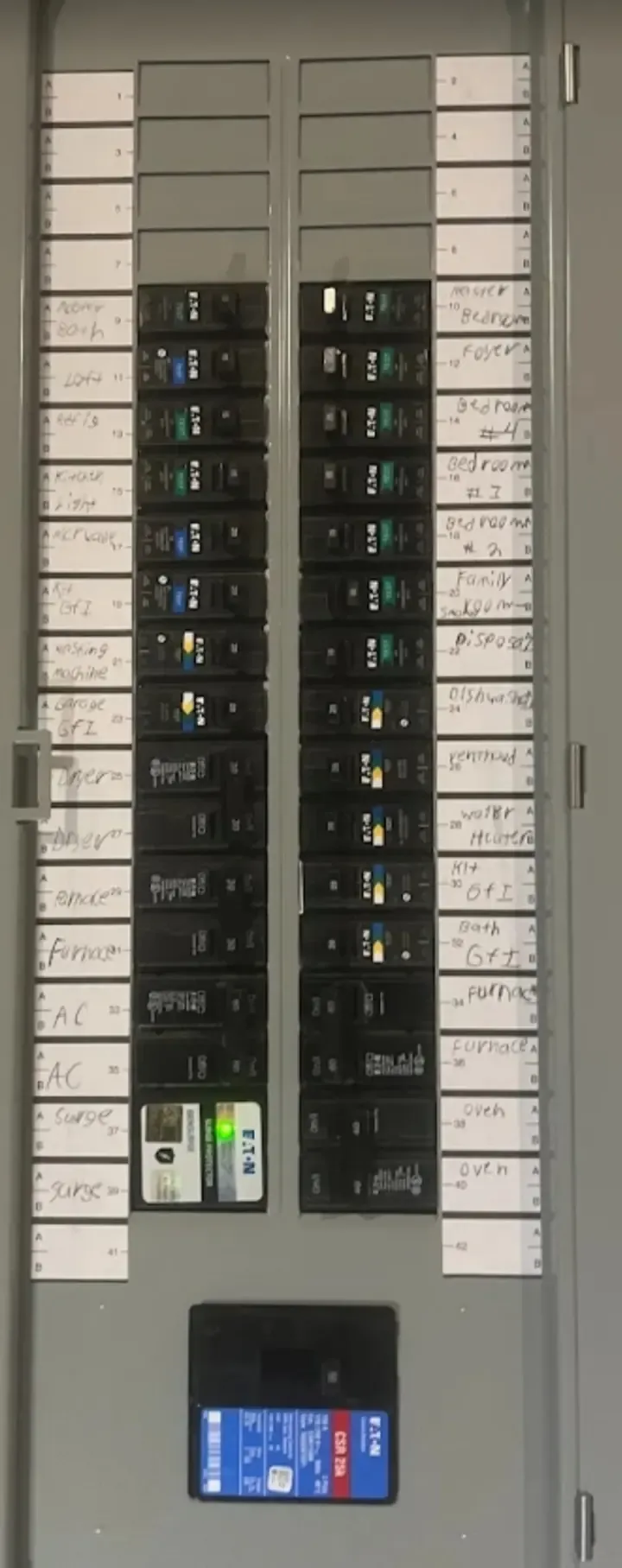
On a panel that's in good shape with room to spare, the install is short and the power is only off for a few minutes. Most units have an indicator light that tells you the protection is still working. After a big hit, or once the light goes out, the unit gets replaced. It did its job.
When it's worth it and when it's optional
I'd put one in without thinking twice if you're getting a new panel or service, if you have a heat pump, an EV charger, a standby generator or a well pump, or if your house loses power a few times a winter. Out along the lake in Derby, Angola and Eden, the power goes when the wind picks up, and every outage and repair means more switching on the lines.
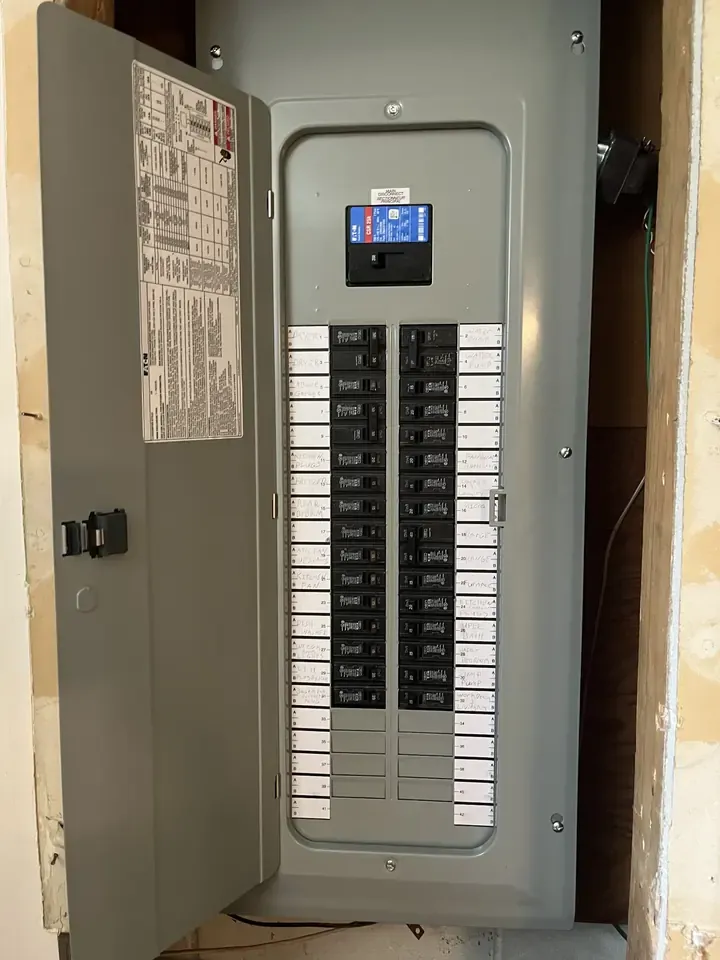
It's more of a judgment call in a small house with gas heat, no big electronics, and a panel you're not touching. Even then, it usually costs less than replacing a furnace control board. If you're not sure, text me a photo of your panel with the door open and I'll tell you if there's room and whether it makes sense. If your panel is the bigger problem, take a look at the signs a panel needs replacing or the panel upgrade page. If a storm already did damage at the meter, start with storm and meter repair.
Frequently asked questions
Is a whole house surge protector worth it?
For most homes with a heat pump, an EV charger, a well pump, a generator or modern appliances with control boards, yes. It protects hardwired equipment that plug-in strips can't reach, and it usually costs less than replacing a furnace board or appliance electronics.
Does the electrical code require a surge protector?
The 2020 National Electrical Code added section 230.67, which requires a surge-protective device on services supplying dwelling units, including when service equipment is replaced. Which edition applies depends on the code your town enforces, so ask about it when you get a panel or service upgrade quote.
Will a whole house surge protector protect my TV and computer?
Only partly. A unit at the panel handles surges on the power lines, but TVs and computers also connect to cable or phone wiring. NIST recommends adding protection at those appliances too, so use a plug-in protector that also covers the cable or network line.
How long does it take to install a surge protector at the panel?
On a panel in good shape with two open spaces, it's a short job and the power is only off briefly. If the panel is full, it may take moving circuits or replacing the panel. Adding it during a panel upgrade is the cheapest time to do it.
Do homes in Derby, Angola and the lakeshore need surge protection?
Homes along Lake Erie in Derby, Angola and Eden lose power often in wind storms, and NIST notes that normal power company operations can cause switching surges. A whole house protector at the panel is a sensible add for those homes, especially with a well pump or generator.