· 6 min read · Chuck
Why does my breaker keep tripping? A Western NY electrician explains
Space heater season is when breakers start tripping. Here's how to tell an overload from a short, a ground fault or a failing breaker, and when to stop resetting it.
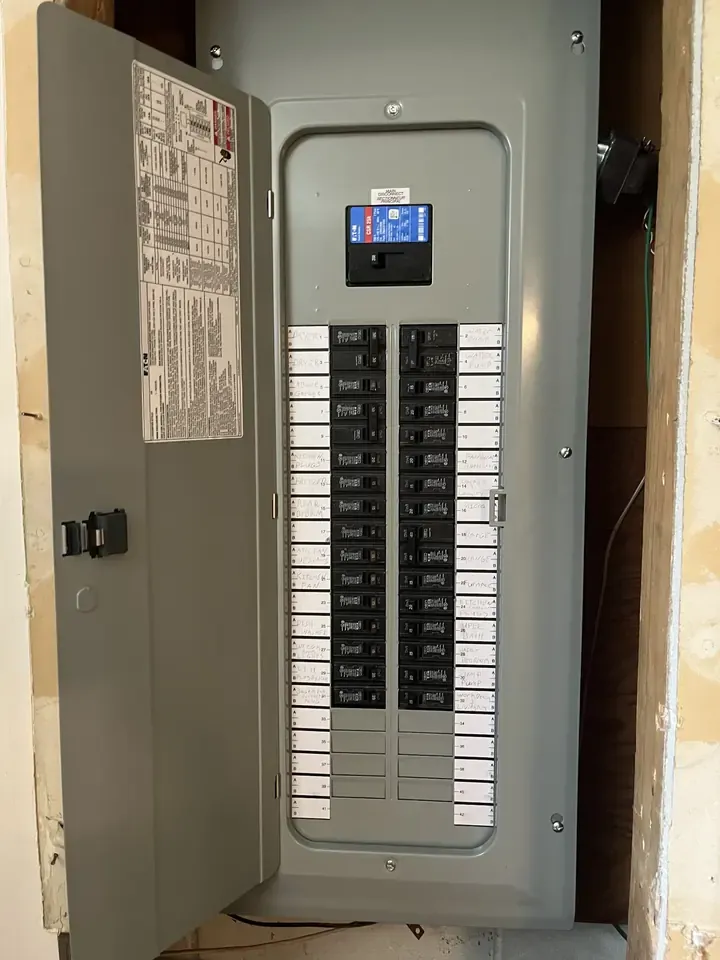
Every November the same call comes in. The first cold snap rolls off the lake, somebody plugs in a space heater, and a breaker that behaved all summer starts tripping. Sometimes it's a simple overload. Sometimes it's a warning about a bad wire. The trick is telling them apart.
Remember the breaker is doing its job. It shuts off when it sees more current than the wire can safely carry, or current going somewhere it shouldn't. Here's how I'd sort out which one you have.
Reset it the right way first
A tripped breaker usually sits in the middle position. Unplug what was running on that circuit, push the handle all the way to OFF, then back to ON. If it holds, plug things back in one at a time and watch which one knocks it out.
Stop resetting if it trips again right away with nothing plugged in, if you hear buzzing or crackling from the panel, or if you smell anything hot. Never hold a breaker on, tape it, or swap in a bigger one. The breaker is sized to the wire. Put a 20 amp breaker on wire meant for 15 and the wire becomes the fuse.
Overload: the usual winter culprit
A standard 15 amp, 120 volt circuit tops out at 1,800 watts. Most plug-in space heaters run around 1,500 watts on high, printed right on the label. Add a TV and a lamp on the same circuit and you're at the edge. Older homes in Lackawanna and Buffalo often have one circuit feeding two bedrooms and a hallway, so a heater in one room and a hair dryer in the next trip the same breaker.
For an occasional trip, move the heater to an outlet on a different circuit. For a house that does this every winter, add a circuit where you need the heat or split the overloaded one.
While we're on heaters: the U.S. Fire Administration reports that portable heaters were only 3% of home heating fires for 2017 to 2019 but accounted for 41% of fatal heating fires in homes. Its advice is to keep anything that can burn at least 3 feet away and to turn space heaters off when leaving the room or going to bed. I'd add one more: plug them straight into the wall, never into a power strip or a light extension cord.
Kitchens are the other big one. Plenty of houses around here have every counter outlet on one breaker, so the microwave, toaster and coffee maker are all fighting over the same 15 or 20 amps on a holiday morning.
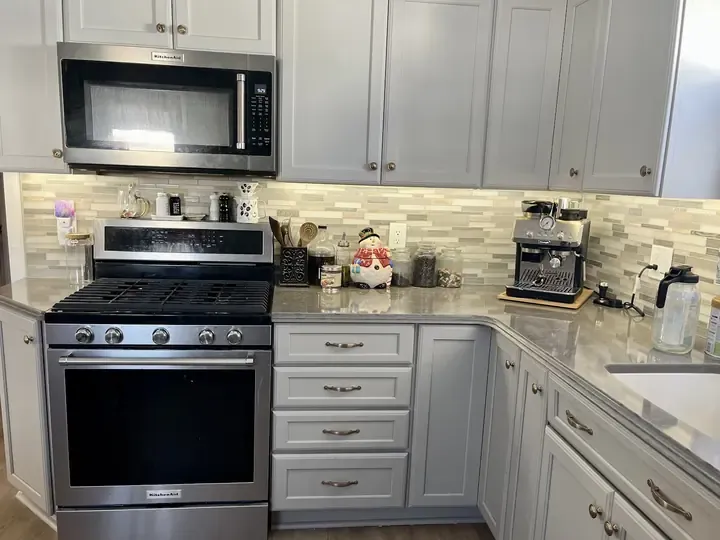
When a kitchen keeps tripping, I trace which outlets share the breaker and run a new circuit to split the counter in two. Once I know which outlets are on it, the work usually takes a few hours.
"Called about getting some work done on a hallway lighting problem and adding an extra circuit breaker to split the wiring for the outlets in my kitchen that were all on one breaker. Chuck came in within a few days and in just a couple of hours completed all the work. ..."
Norman P., 5-star Google review, April 2026
Short circuit or ground fault: trips instantly
An overload takes seconds or minutes to trip because the breaker reacts to heat building up. A short circuit trips instantly, often with a pop, because a hot wire is touching a neutral or ground. Look for a scorched outlet, a cracked cord, or a light fixture somebody recently swapped.
A ground fault is current leaking to ground, and in Western New York it's usually water. Outdoor outlets, garage circuits and sump pumps are the repeat offenders after a thaw. If a breaker trips every time it rains, water is getting in somewhere.
AFCI and GFCI breakers trip for their own reasons
If the breaker has a test button, it's a GFCI, AFCI or dual function breaker. A GFCI watches for current leaking to ground. An AFCI watches for arcing, the kind you get from a loose connection, a nail through a cable or a cord pinched under furniture.
These trip on real problems more often than people think, though some older vacuum motors can set them off too. Try the suspect appliance on a different circuit. If the trips follow the appliance, it's the appliance. If they stay with the circuit, there's a wiring issue in that run. Don't swap in a standard breaker to make the trips go away.
| What you notice | Most likely cause | Next step |
|---|---|---|
| Trips after a few minutes with heater on | Overload | Move the heater to another circuit |
| Trips instantly, every time | Short circuit | Leave it off and call |
| Trips when it rains or thaws | Ground fault, usually water | Check outdoor and garage outlets |
| Test button breaker, random trips | AFCI or GFCI sensing a fault | Test appliances on another circuit |
| Breaker warm, scorched or buzzing | Failing breaker or loose connection | Call the same day |
That last row matters. A breaker that feels warm, buzzes or won't stay latched may be worn out, or loose where it clips onto the panel. That's heat inside the panel, and I treat it as same day. If your panel is old enough that this is a pattern, read my post on signs your home needs a panel upgrade.
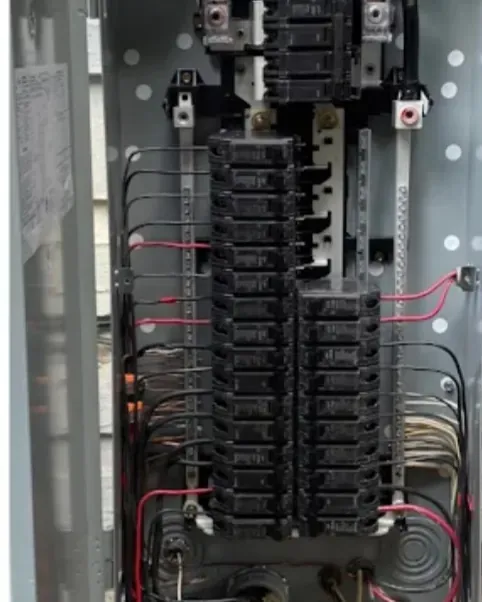
What I look at when I come out
I ask what was running and when it trips, then check the breaker, the wire size behind it and what else shares the circuit. Often the answer is two rooms nobody knew were connected. Sometimes it's a backstabbed outlet, with the wire pushed into the back of the device instead of wrapped on the screw, that has loosened and started heating up.
Text me a photo of the panel with the door open and a note on what was running, and I can usually tell you what we're dealing with. Here's the full list of outlet and circuit repairs I handle. If it's tripping and you smell burning, use the 24 hour emergency line instead of waiting.
Frequently asked questions
Is it dangerous if my breaker keeps tripping?
The trip itself is the breaker protecting your wiring. It becomes dangerous when people keep resetting a breaker that trips instantly, hold it on, or install a bigger one. An instant trip, a burning smell, or a warm or buzzing breaker means a fault that needs to be found.
Why does my space heater trip the breaker?
Most plug-in space heaters draw about 1,500 watts on high, and a standard 15 amp circuit tops out at 1,800 watts. Anything else on that circuit can push it over. Move the heater to a different circuit and plug it directly into the wall. If it happens every winter, add a dedicated circuit.
How fast can an electrician fix a tripping breaker in the Southtowns?
CFW Electric is based in Derby and covers Hamburg, Orchard Park, West Seneca, Angola, Eden, Lake View, Lackawanna and Buffalo. Same day service is common, and the phone is answered 24 hours. Splitting an overloaded kitchen circuit is often a few hours of work once the cause is found.
Why does my GFCI or AFCI breaker trip for no reason?
There is usually a reason you can't see. GFCI breakers trip on current leaking to ground, often moisture in an outdoor or garage outlet. AFCI breakers trip on arcing from loose connections or damaged cords. Try the appliance on another circuit to see whether the trips follow it or stay with the wiring.